Your MRI Says "Slipped Disc." Your Surgeon Says "Surgery." We Offer a Different Path.

Singapore’s specialist in non-surgical structural correction for Cervical Disc Herniation. We help "The MRI Patient" understand their report, eliminate the "electric" arm pain, and avoid the risks of spinal fusion.

“We help patients reverse the effects of a 'Slipped Disc'…”

Avoid the Knife:
Proven non-surgical protocols to decompress the disc and allow the body to heal.
Quiet the Nerve:
Eliminate the "lightning bolt" pain and burning sensations in your arm.
Clinical Clarity:
A plain-English explanation of your MRI results and a realistic 90-day recovery roadmap.
Clinically Reviewed by Dr Will Kalla › Lead Structural Correction Expert | 29 Years Clinical Practice in Singapore [Last Reviewed: June 23, 2026]
Red check mark symbol on white background.
Our Clinical Protocols are Backed by Peer-Reviewed Research From: * PubMed Central (PMC) * National Institutes of Health (NIH) * North American Spine Society (NASS)
Dr. Will Kalla is a Doctor of Chiropractic and is not a registered medical practitioner/specialist with the Singapore Medical Council.

The "Jelly Donut" Reality. What Actually Happened to Your Neck?


You likely felt a sudden "pop" in the gym, or woke up with a neck so stiff you couldn't move. Now you have an MRI report full of scary words like Extrusion, Protrusion, or Thecal Sac Compression.

Here is the simple truth:

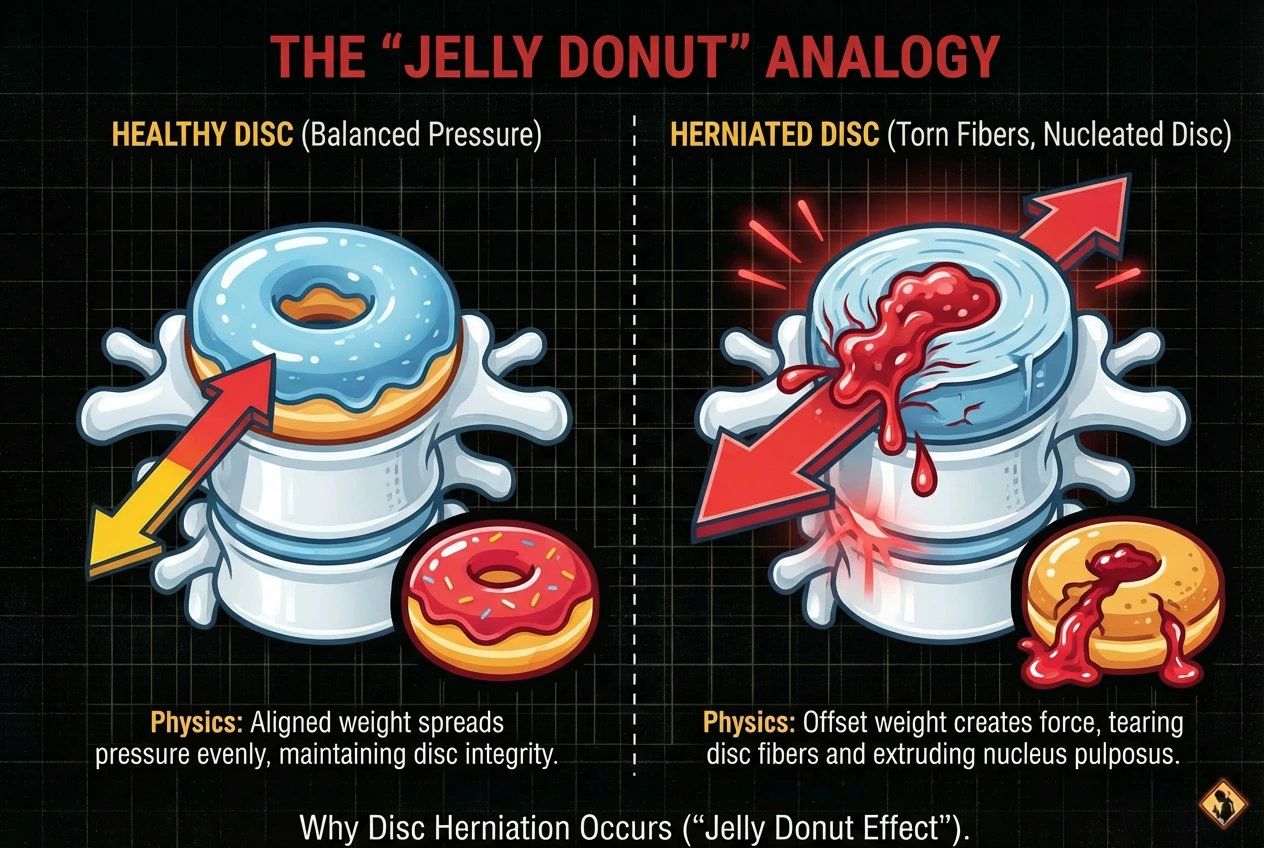
Your disc is like a Jelly Donut.

1

The Wall (Annulus):

The tough outer layer.
2

The Jelly (Nucleus):

The soft centre.


A HERNIATION means the wall has cracked, and the "jelly" has leaked out. This leaked material lands directly on your spinal nerve, acting like acid. This is why the pain is so sharp, sudden, and electrical, unlike the dull ache of arthritis.

HEALTHY DISC

(Balanced Pressure)
Physics: Aligned weight spreads pressure evenly, maintaining disc integrity.

HERNIATED DISC

(Torn Fibers, Nucleated Disc)
Physics: Offset weight creates force, tearing disc fibers and extruding nucleus pulposus.

🧬 The Resorption Paradox: Why a "Large" Leak is Often Better News

Why your surgeon might be looking at the wrong thing.


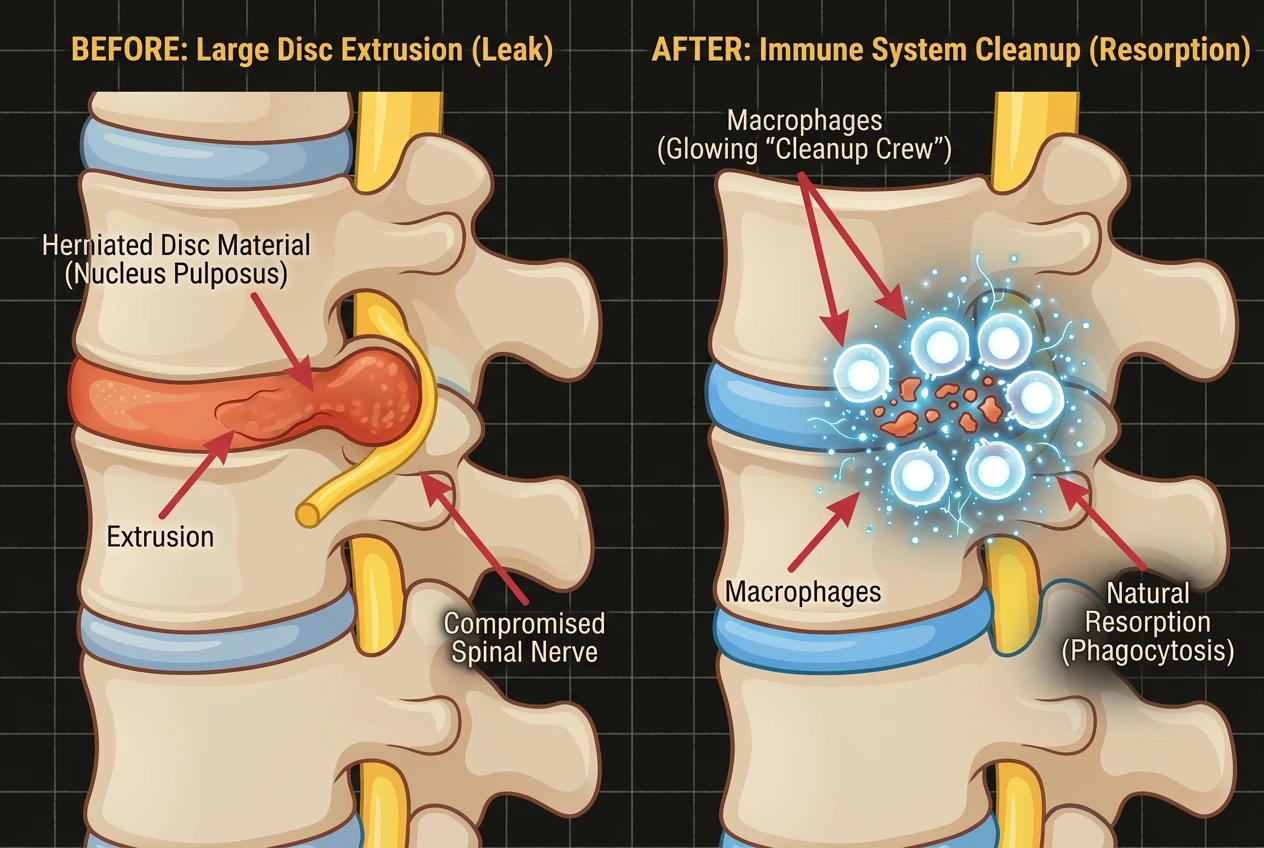
If your MRI shows a "Large Extrusion," you might be terrified. But in the world of modern spinal immunology (Hock & Maselli, 2024), we know something your surgeon might not mention: The bigger the leak, the better the chance of natural healing.

The Hidden Bulge

If the jelly stays inside the donut (a bulge), your immune system can't see it. It stays there for years, causing a dull, chronic ache.

The Visible Leak

When the jelly "leaks" out (an extrusion), it enters the epidural space where your blood supply and immune system can see it.

Your body treats that leaked jelly like a foreign invader. It sends macrophages, the body's natural "cleanup crew", to eat and reabsorb the material. This is called Spontaneous Resorption.

OUR STRUCTURAL MISSION

We don't "push" the jelly back in. We use the R3NEW X™ Program to mechanically decompress the vertebrae, "opening the door" so your body’s natural cleanup crew can reach the leak and finish the job without being crushed by your spinal weight.

The Proof is in the Numbers. Your "Resorption Potential"


Many patients in Singapore feel that a "Slipped Disc" is a permanent mechanical failure. However, a landmark meta-analysis (Chiu et al.) published in Clinical Rehabilitation reveals that the body’s ability to "clean up" a disc injury is actually incredibly high, especially for the "scary" cases.

Spontaneous Resorption Data

Cervical disc herniation spontaneous resorption rates by type: Sequestration 96% regression rate, 43% complete resolution (cite: 83, 84, 85, 92). Extrusion 70% regression rate, 15% complete resolution (cite: 86, 87, 88, 93). Protrusion 41% regression rate (cite: 89, 90, 91, 94). Bulge 13% regression rate (cite: 95, 96, 97, 98).
Herniation Type Regression Rate Complete Resolution The Clinical Reality
Best Case Sequestration 96% 43% The "jelly" has fully separated; the immune system cleans it up rapidly.[cite: 83, 84, 85, 92]
Extrusion 70% 15% The "jelly" is leaking; high potential for natural resorption.[cite: 86, 87, 88, 93]
Protrusion 41% N/A A deep bulge; requires mechanical help to trigger healing.[cite: 89, 90, 91, 94]
Bulge 13% N/A The "jelly" is trapped; least likely to resolve without structural reset.[cite: 95, 96, 97, 98]
Best Case Sequestration

Regression Rate

96%

Complete Resolution

43%

The "jelly" has fully separated; the immune system cleans it up rapidly.

Extrusion

Regression Rate

70%

Complete Resolution

15%

The "jelly" is leaking; high potential for natural resorption.

Protrusion

Regression Rate

41%

Complete Resolution

N/A

A deep bulge; requires mechanical help to trigger healing.

Bulge

Regression Rate

13%

Complete Resolution

N/A

The "jelly" is trapped; least likely to resolve without structural reset.


2024 Research Update:
The 70% Global Standard


A massive 2024 meta-analysis of over 2,200 patients confirmed these findings, reporting an overall resorption rate of 70%. For the most severe cases (sequestrations), the healing rate rose to 88%.

THE SPECIALIST'S VERDICT

"While research confirms an incredible 96% natural healing rate for severe sequestrations (Chiu et al.), many Singaporeans fail to see these results. Why? Because you cannot heal a 'clamped' joint. Forward Head Posture (HFP) creates a mechanical blockage, effectively acting as a 'clamp' that prevents the necessary blood flow and immune cells from reaching the injury site. At our clinic, we use the R3NEW X™ protocol to structurally 'unlock' that joint, creating the mechanical environment your body needs to fulfill its 96% healing potential."

Beyond the Pinch: Turning Off the "Acid" in Your Disc

Why your disc isn't just "slipped". It’s chemically stressed


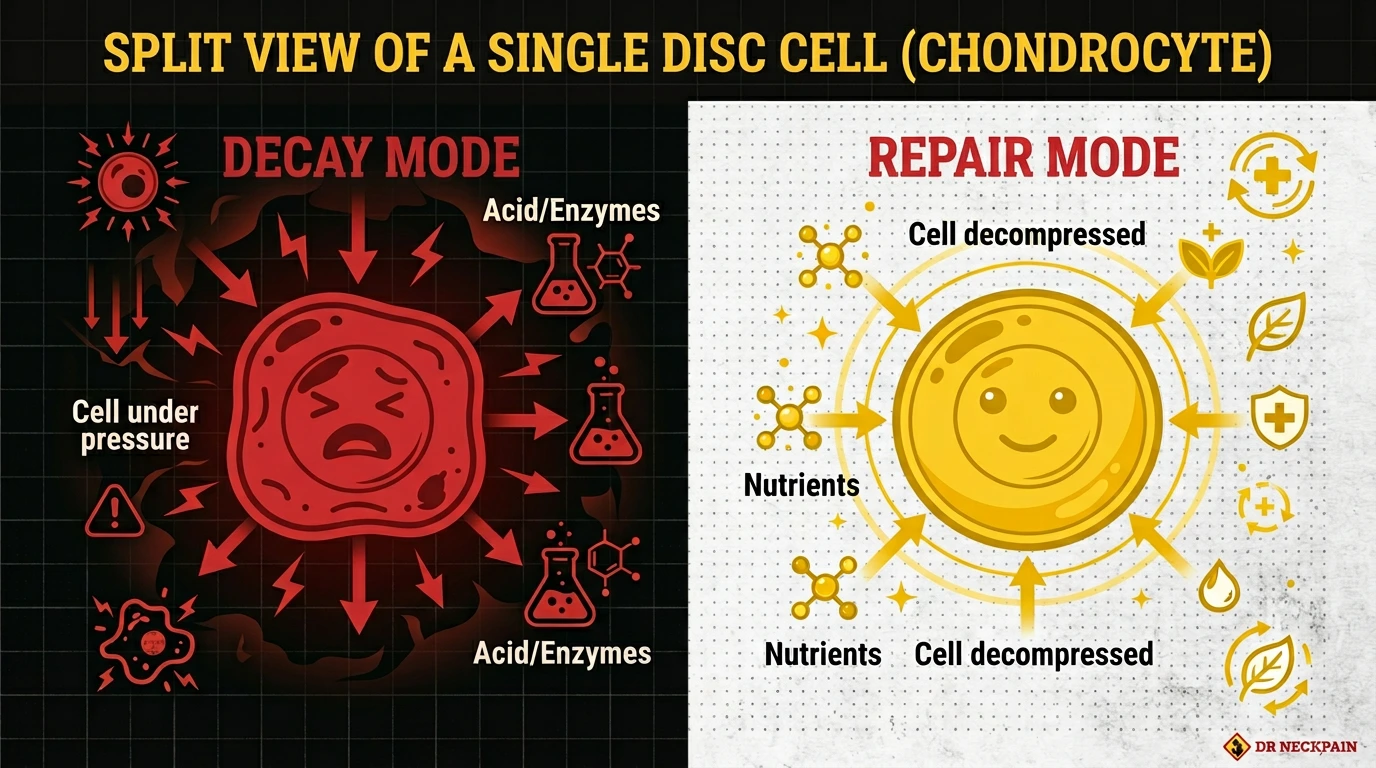
Most people think a herniated disc is just a mechanical problem, like a bulge in a tire. But new research into Mechanotransduction (the study of how pressure changes your biology) shows it’s actually a "chemical fire".

When your neck is out of alignment and your discs are "pancaked" by the weight of your head.

⚠️ The "Decay" Switch

Your disc cells sense the crushing pressure and stop making healthy collagen. Instead, they start producing enzymes (acid) that actually eat away at the disc from the inside. This is called the "Decay Mode."

✅ The "Repair" Switch

When we use the R3NEW X™ Program to restore your cervical curve and lift that pressure, we send a new signal to those same cells.


By "un-clamping" the joint, we flip the switch from Decay (Breakdown) to Repair (Anabolic).
This stops the acid production and signals your disc to start rehydrating and strengthening itself at a cellular level.

THE SIMPLE TRUTH

We don't just "move bones"; we change the cellular signal in your spine.
We move your body from a state of
self-destruction to a state of self-restoration.

The "MRI Terror": Why a Slipped Disc Diagnosis
Feels Like a Life Sentence


In Singapore, patients often leave a specialist clinic feeling traumatised by their MRI report. You see terms such as "Extrusion," "Nerve Root Impingement," and "Deformity of the Cord." You’ve likely been told:

"You have the neck of a 70-year-old"

"Don't lift anything heavy ever again"

"Your disc is leaking and hitting your nerve"

"You need to stop all exercise immediately"

"If this doesn't get better in two weeks, we need to talk about fusion surgery"


Slipped Disc vs. Herniation: What’s Actually Happening?

While everyone in Singapore calls it a "slipped disc", discs don't actually "slip" - they tear, bulge, or herniate.

The Bulge

The disc is flattening and pushing against the nerve window. (The "Warning" stage).

The Herniation

The "jelly" inside the disc has pushed out through a tear, causing intense inflammation and "electric" shocks. A Herniated Disc is the most common cause of Radiculopathy (Numbness & Tingling).

The Radiculopathy

This is the result - the shooting pain you feel in your hand. If you have this, the "fire" is in your neck, not your arm. (If you only have tingling, see our
Numbness & Tingling Page.

Confused by Your Report? Let’s Decode the Jargon.

Decode Your MRI Report

MRI jargon decoder for cervical disc herniation patients: The Bulge — the disc is flattening and pushing against the nerve window (warning stage). Herniation — the jelly inside the disc has pushed out through a tear, causing inflammation and nerve pain. Radiculopathy — shooting pain felt in the hand, indicating nerve root involvement from the cervical spine.
Term Definition
The Bulge The disc is flattening and pushing against the nerve window.
Herniation The "jelly" inside the disc has pushed out through a tear.
Radiculopathy Shooting pain felt in the hand, indicating nerve involvement.
Term Definition

The Bulge

The disc is flattening and pushing against the nerve window.

Herniation

The "jelly" inside the disc has pushed out through a tear.

Radiculopathy

Shooting pain felt in the hand, indicating nerve involvement.


What Your MRI Says vs. What it Actually Means

Decode Your MRI Report

Tap any finding to translate it.

What It Actually Means

The disc is touching the "sleeve" around your spinal cord.

Our Structural Solution

We realign the vertebrae to "un-pinch" the sleeve.

What It Actually Means

The "exit window" for your nerve is getting narrow.

Our Structural Solution

We open the window by reducing pressure on the disc.

What It Actually Means

Your discs are "drying out" - normal ageing in Singapore.

Our Structural Solution

We restore movement to "pump" nutrients back into the disc.

What It Actually Means

These are the "fail points" in 80% of CBD office workers.

Our Structural Solution

Targeted correction at the specific stress point.

What It Actually Means

Your vertebrae are "bruised" and inflamed from constant disc pressure.

Our Structural Solution

We stop the "hammering" of the bone by restoring the shock-absorbing curve.

Modic Changes: When the Bone Itself is"Bruised"

If your MRI report mentions Modic Changes, it means the stress on your neck has moved beyond the disc and is now affecting the bone (vertebrae) itself.

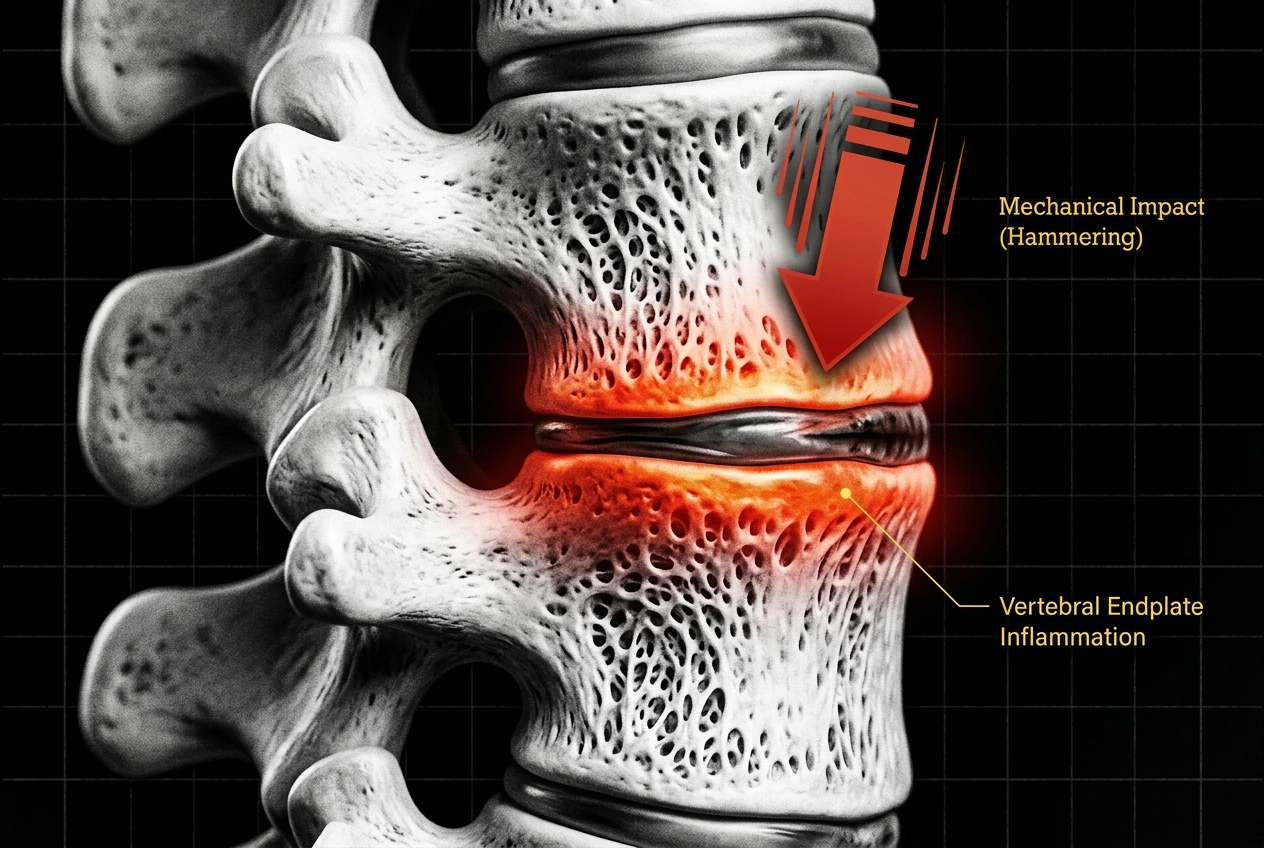
⚠️ Modic Type 1 (The Inflammation Phase)

Think of this as a "Bone Bruise". Because your disc has lost its height, the two bones are effectively "hammering" against each other every time you move. This causes the bone marrow to become inflamed and swollen.
This is often why your pain feels like a deep, constant throb that doesn't go away with rest

✅ The Structural Fix

You cannot "rub" a bone bruise away, and painkillers only mask the signal. To fix a Modic Change, you must change the physics of the joint.

Your body treats that leaked jelly like a foreign invader. It sends macrophages, the body's natural "cleanup crew", to eat and reabsorb the material. This is called SPONTANEOUS RESORPTION.

By using the R3NEW X™ Program to restore your cervical curve, we create a "Mechanical Buffer." We shift the weight off the inflamed bone marrow and back onto the structural pillars of the spine. Once the "hammering" stops, the bone marrow can finally settle down and heal.

Why Singapore Professionals are Prone to Disc Injuries

It isn't just major "accidents." It is the cumulative Micro-Trauma (the same mechanical stress that causes Sports Neck Injuries) of the Singapore lifestyle:

The "Grab & Go" Posture:

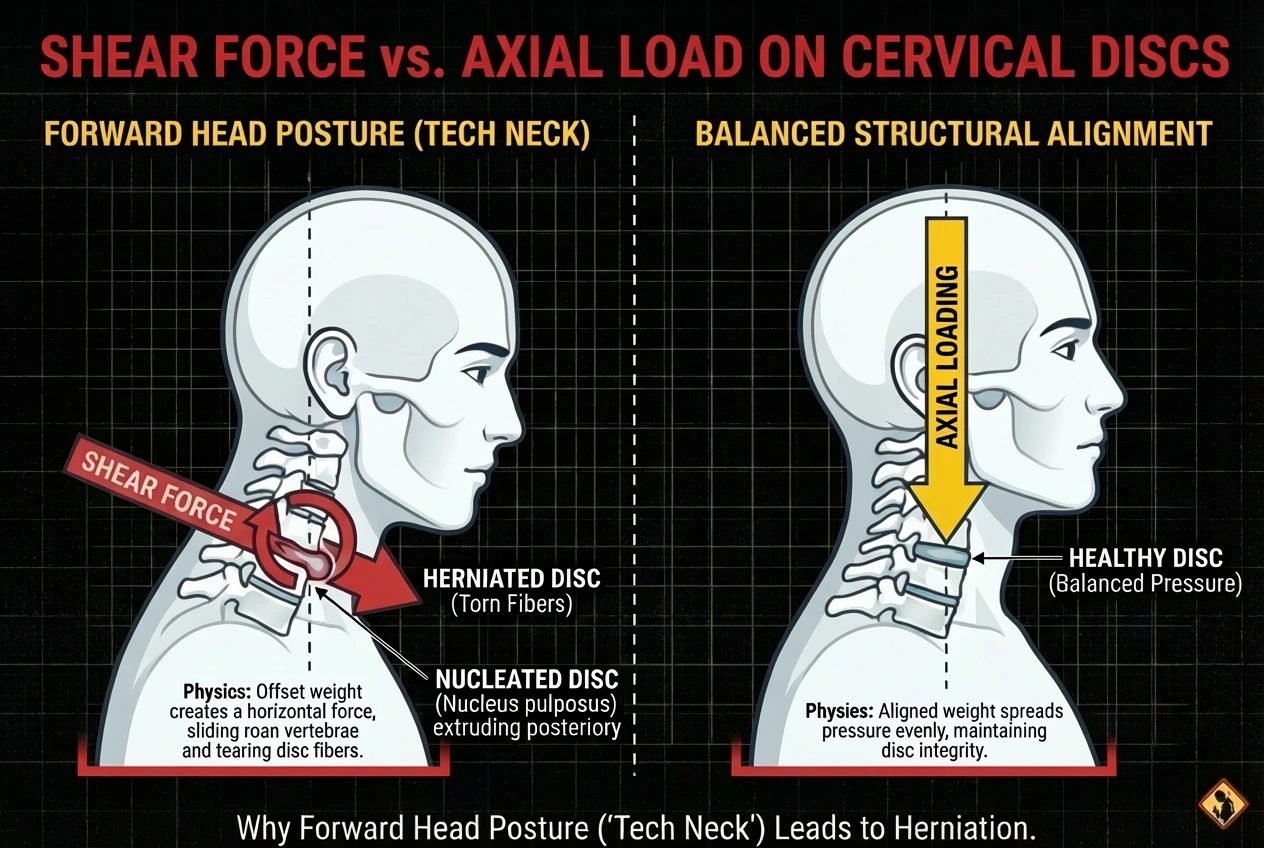
Looking down at devices for 6+ hours a day creates "Shear Force" that slowly rips the disc fibres.

The High-Stress CBD Slump:

Stress causes you to "hike" your shoulders, increasing the internal pressure (PSI/Bar) inside your cervical discs until they give way.

Looking down at your phone on the MRT can cause mechanical stress, which may lead to disc failure and vertigo. Learn how we fix Forward Head Posture.

Why "Wait and See" is Dangerous, but Surgery isn't the Only Fix.

Most patients in Singapore are given two bad options:

1. The "Painkiller" Route


Take Lyrica/Gabapentin or Anarax and wait. (Problem: The mechanical compression remains.

2. The "Fusion" Route


Surgery to fuse the bones with metal screws. (Problem: It is permanent and creates stress on other joints.)

The Missing Option: Mechanical Decompression.


Your body has an amazing ability called "Resorption". If we can mechanically pull the vertebrae apart (Decompression) and stabilise the neck, the body can naturally "clean up" and shrink the herniated material over time. But it cannot do this if the joint remains jammed.

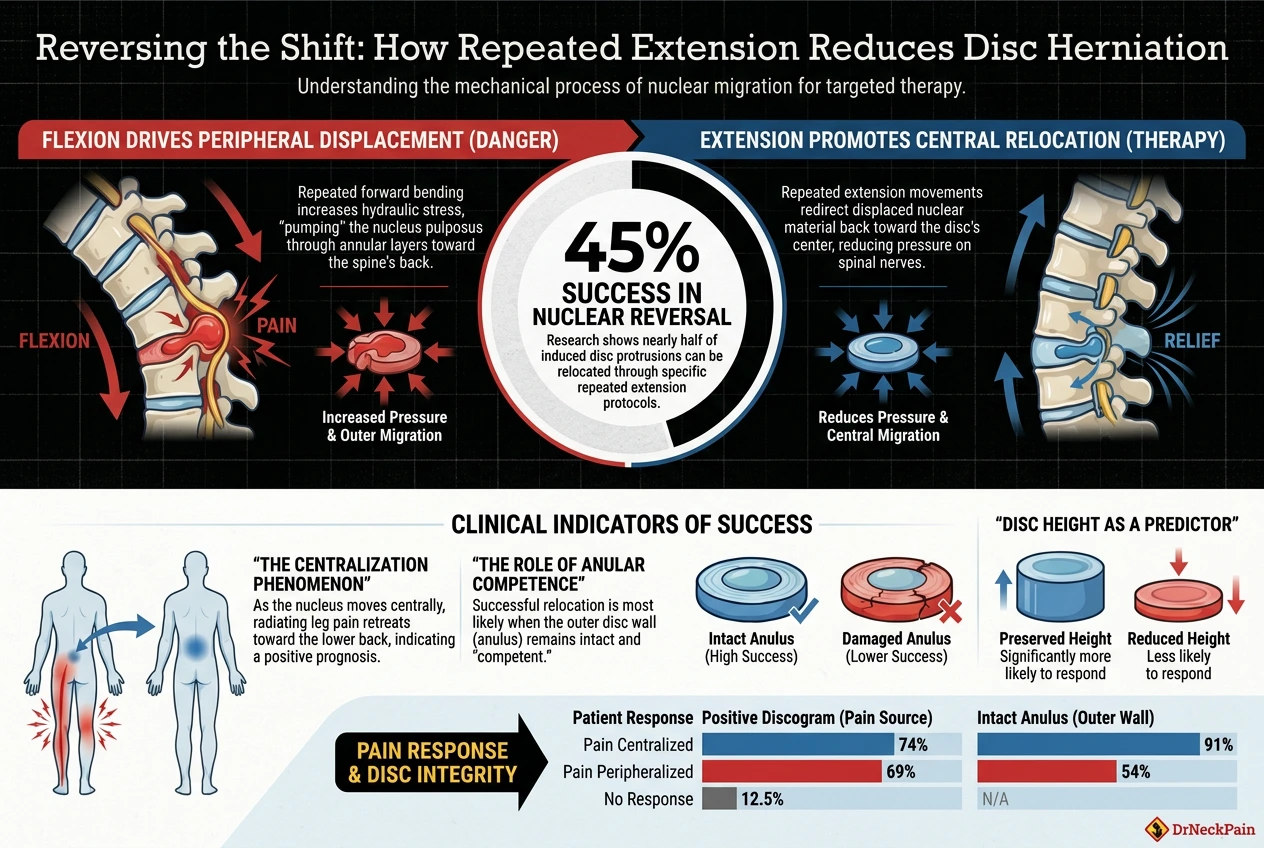
Note from Dr Will...

The same principle applies to the cervical spine, reducing the size of the disc herniation with repeated extension.

You Don't Live Lying Down.
Your Diagnosis Shouldn't Happen That Way Either.

Why Standard Singapore MRI Scans Often Fail to Show the Root Cause of our Pain.


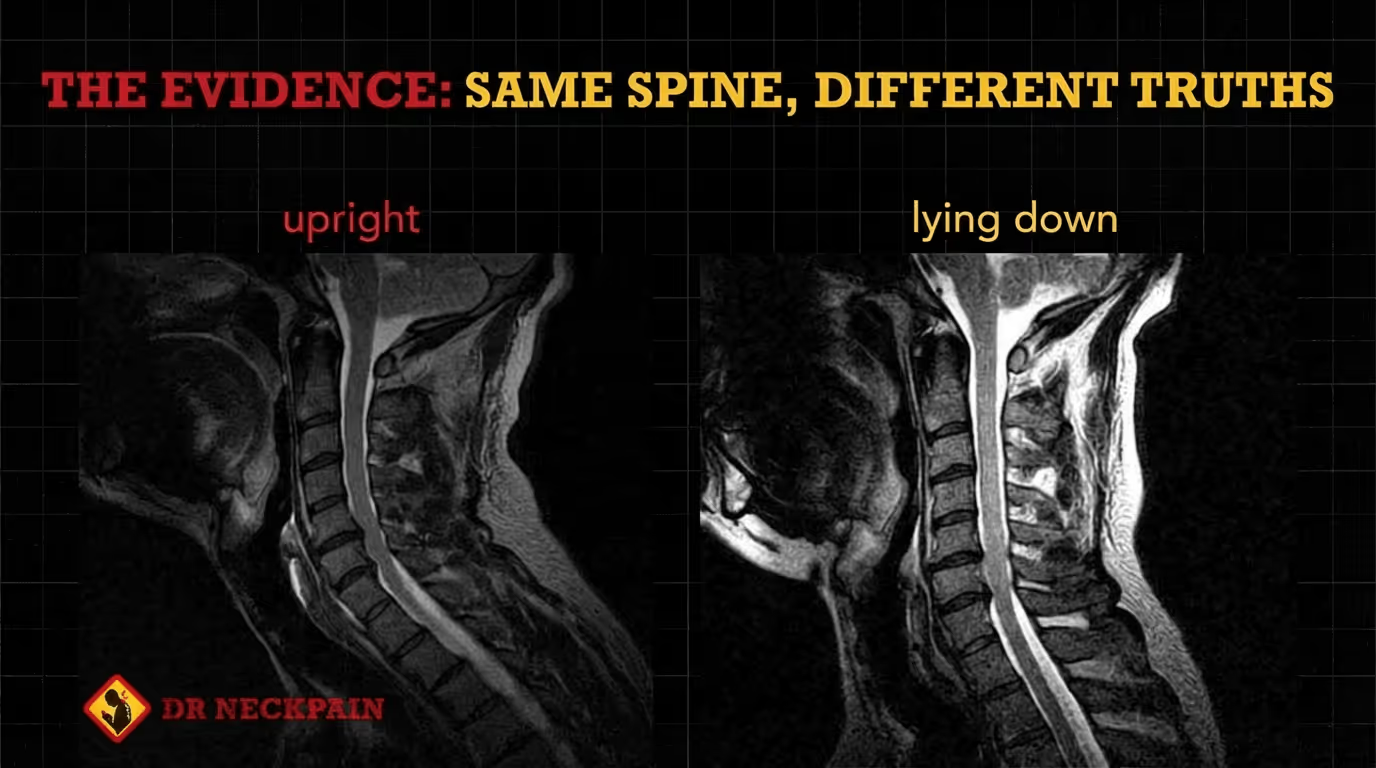
Most MRIs in Singapore are performed in a "Supine" (lying down) position. While this is excellent for assessing soft tissue, it is fundamentally flawed for measuring a structural injury. When you lie down, gravity is removed, your neck muscles relax, and the vertebrae "un-clamp".

This allows a herniated disc to temporarily retract, resulting in a report that looks "mild" despite your 8/10 standing pain.

Evidence of the "Gravity Gap". These MRI scans of the same patient demonstrate how disc material can retract when lying down (right), potentially leading to a "normal" but misleading report. When the same patient is imaged upright (left), the gravitational load reveals the true extent of the herniation, including Forward Head Posture, and nerve compression that occur during daily life.

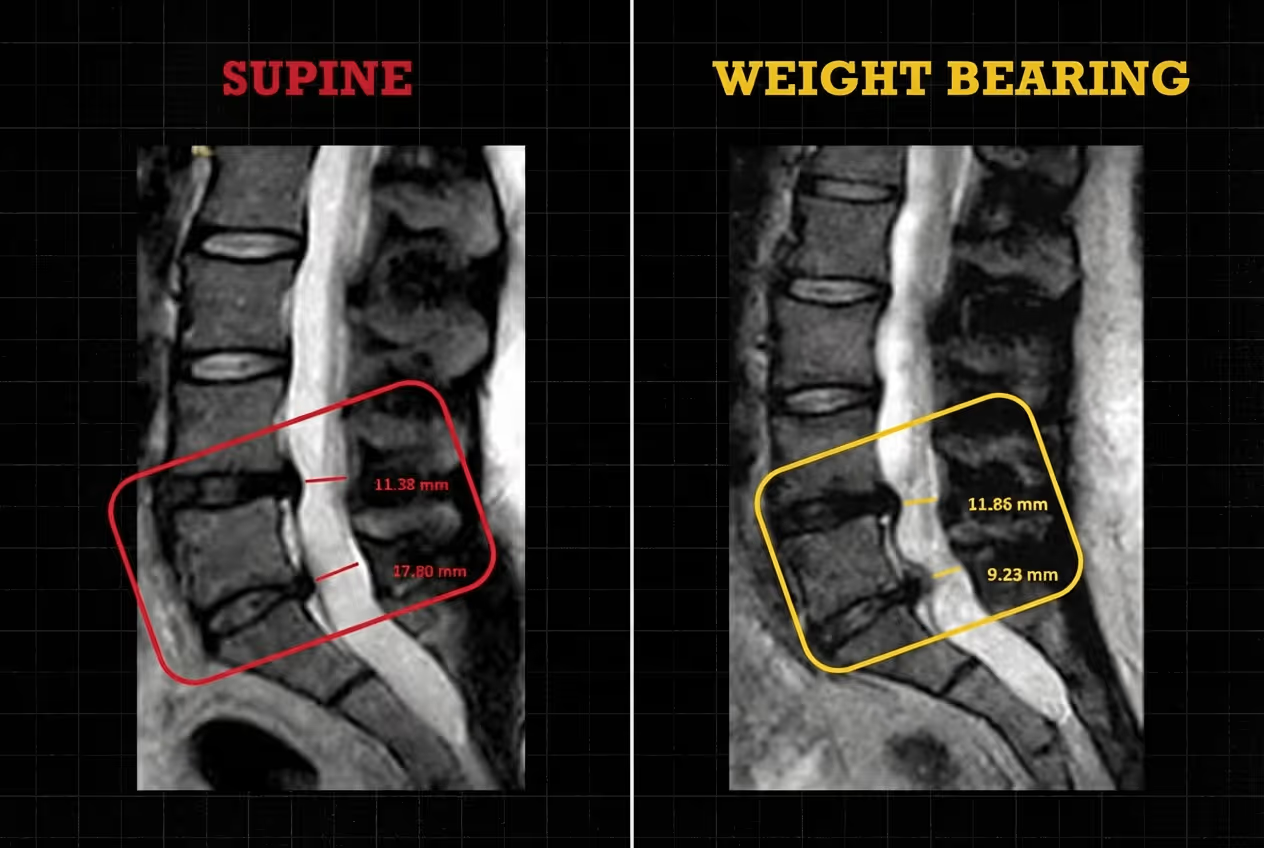
The "Pancake" Effect. This comparative MRI scan provides quantitative evidence that standard lying-down scans are insufficient for structural diagnosis. In the Supine (lying down) position, the disc height is relatively healthy, with the spinal canal measuring 12.00 mm. However, in the Weight Bearing (upright) position, gravity forces the disc to collapse in height and reduces the spinal canal to merely 9.23 mm. This 2.77 mm reduced gap is the "Mechanical Truth" that triggers nerve impingement, yet remains invisible on most standard hospital reports in Singapore.

Supine (Lying Down)

Disc height is relatively healthy, with the spinal canal measuring 12.00 mm.

Weight Bearing (Upright)

Gravity forces the disc to collapse, reducing the spinal canal to merely 9.23 mm.


This 2.77 mm reduced gap is the "Mechanical Truth" that triggers nerve impingement, yet remains invisible on most standard hospital reports in Singapore.

The Superiority of Weight-Bearing X-Rays


At our clinic, we focus on Structural Correction, which requires seeing how your spine behaves under the 5kg–15kg load of your head.

The Load Factor

We measure your disc space and nerve windows (foramen) while you are upright.

The Structural Roadmap

A weight-bearing X-ray acts as our "GPS" for the R3NEW X™ Program. It tells us exactly which way to shift the vertebrae to create permanent decompression, information an MRI simply cannot provide.

Dynamic Reality

We often see "invisible" instabilities on a standing X-ray that completely disappear the moment a patient lies down for an MRI.

Neck Slipped Disc: Physiotherapy vs. Chiropractic Structural Correction


Many patients in Singapore find themselves stuck in a cycle of "rehab fatigue." While standard physiotherapy is often the first step, it often fails to resolve chronic nerve pain because it addresses muscles without addressing the mechanics.


If your disc is being "pancaked" by a collapsed cervical curve, muscle-strengthening exercises alone cannot "un-pinch" the nerve. Until the spinal architecture is realigned, any exercise effectively adds load to a failing structure

Why Standard Treatment Falls Short

Feature Standard Physiotherapy R3NEW X™ Structural Correction
Primary Focus
Muscle strengthening and range of motion.
Architectural realignment of the spine.
Diagnostic Tool
Functional movement screening.
Weight-bearing X-ray & MRI "Line-of-Drive" analysis.
The "Why" it Fails
Exercises cannot "un-clamp" a vertebra that has shifted structurally.
We create "negative pressure" to pull the disc away from the nerve.
The Goal
Manage pain and support the injury.
Decompress the disc and reverse mechanical failure.
Treatment Method
Exercises, stretching, and manual therapy.
Precision structural RESET and RECALIBRATION.
Long-Term View
Maintenance and symptom control.
Permanent stability and surgical avoidance.
Standard Physio
R3NEW X™
Primary Focus

Muscle strengthening and range of motion.

Architectural realignment of the spine.

Diagnostic Tool

Functional movement screening.

Weight-bearing X-ray & MRI "Line-of-Drive" analysis.

The "Why" it Fails

Exercises cannot "un-clamp" a vertebra that has shifted structurally.

We create "negative pressure" to pull the disc away from the nerve.

The Goal

Manage pain and support the injury.

Decompress the disc and reverse mechanical failure.

Treatment Method

Exercises, stretching, and manual therapy.

Precision structural RESET and RECALIBRATION.

Long-Term View

Maintenance and symptom control.

Permanent stability and surgical avoidance.

Get Answers & Avoid the Knife: Correct the Disc Failure, Don't Just Mask the Nerve Pain

I know the fear of holding an MRI report that says "Slipped Disc" or "Herniation". You could have even been told that you need surgery, and worry about the recovery time, the cost, and whether you’ll ever be "the same" again. Whether you are struggling with "electric shocks" shooting down your arm, or you’re terrified because your grip strength is failing and you’ve started dropping your phone, the uncertainty is exhausting.

Most practitioners treat a herniated disc as a permanent "broken" part. I treat it as a structural failure that can be improved and often reversed through precise mechanical decompression.

29 Years of Experience

I’ve helped many of my patients to avoid the operating theatre. While most practitioners focus on the site of the pain (the arm), I focus on the "Source of the Leak" - the cervical disc itself, by using my proprietary R3NEW X™ Program.

Structural, Not Symptomatic

We use precise X-ray analysis to map the exact angle of your herniation. We don't just "crack" the neck; we perform targeted structural correction to create negative pressure within the disc, encouraging the herniated material to move away from the nerve root. We don't just manage your pain; we create the structural environment for the disc to heal.

I am confident we can finally provide the clinical answers you've been seeking, helpyou avoid the operating theatre, and silence the "electric" pain for good.

What Clinical Disc Restoration Means for Your Future


When we decompress the herniated disc and restore your structural alignment, we aren’t just masking a symptom - we are saving your nerves and avoiding unnecessary surgery.

1

Immediate "Neurological Silence" - Relief from Radiculopathy Pain

The Shift

A herniated disc creates a "chemical and mechanical fire" on the nerve root (Radiculopathy), sending constant electric shocks down your arm.

The Result

By physically opening the nerve window through structural correction, we take the "crushing" pressure off the nerve. Our patients report the immediate silencing of that burning, lightning-bolt pain, allowing them to finally sleep through the night and focus at work without the "buzzy" distraction in their arm.

2

Restoration of Grip Strength & Fine Motor Skills

The Shift

Prolonged disc pressure "chokes" the signals between your brain and your hand, leading to weakness and the frequent dropping of objects.

The Result

As nerve conduction is restored, the "battery" to your muscles is reconnected. You will regain the confidence to hold your phone, type at full speed, and carry heavy bags without the fear of your hand suddenly "giving out." You aren't just pain-free - you are strong again.

3

Long-Term Surgical Avoidance & Spinal Stability

The Shift

A herniated disc is often a sign of a collapsed cervical curve. If you don't correct the curve, the pressure persists - leading to a $25,000+ spinal fusion surgery in Singapore.

The Result

Our R3NEW X™ Program stabilises the spinal architecture to prevent re-herniation. By correcting the underlying mechanical failure, you halt the rapid onset of Cervical Spondylosis & Bone Spurs. You invest in a stable spine that keeps you active, athletic, and surgery-free well into your 50s and 60s.

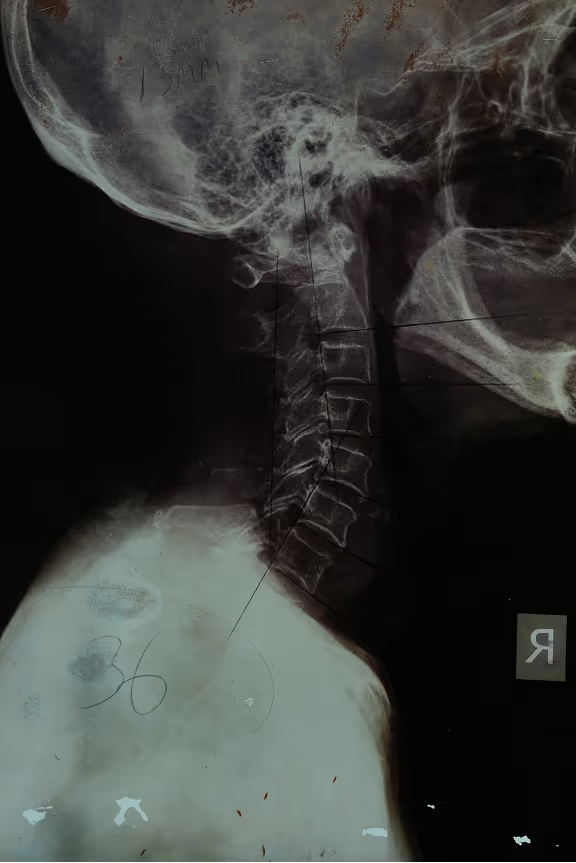
Cervical spine X-ray of an 86-year-old female in Singapore showing almost perfect structural alignment, a healthy natural neck curve, and zero spinal degeneration. Neck Pain Treatment Singapore

A Note from Dr Will

"This is Auntie, age 86 when she took this X-ray in 2012. She has no degeneration to speak of. Correctstructure keeps your spine healthy for life".

Dr Will

The R3NEW X™ Structural Correction Method

1

Precision Disc & Nerve Analysis

We perform a complete neurological and structural spine assessment. While we thoroughly review and cross-reference your hospital MRI to understand the soft-tissue injury, we do not rely on lying-down scans for structural mapping. Instead, we calculate the exact degree of mechanical compromise using weight-bearing X-ray measurementsshowing how your disc height and "nerve windows" behave under the real-world stress of gravity.

2

The R3NEW X™ Decompression Program

We utilise a specialised clinical approach to decompress, correct, and stabilise your cervical spine.

RELEASE

Release the deep spinal guardingthat keeps the disc under constant pressure.

RESET

Reset the cervical vertebrae tocreate "negative intradiscal pressure", effectively vacuuming the herniated material away from the nerve root.

RECALIBRATE

Recalibrate your spinal stability toensure the disc remains decompressed even during long hours at your CBD office desk.

3

Neurological Freedom & Surgical Avoidance

Live without the constant fear of surgery or losing grip strength. Enjoy the return of full sensation to your fingers and the strength to carry out your daily life in Singapore, whether that’s high-intensity training or 12-hour workdays. 

Do You Have a "Soft" Injury or "Hard" Decay?

It is vital to know the difference, as the treatment is different.

Feature Herniated Disc (This Page) "Soft" Injury Spondylosis Arthritis / "Hard" Decay
Onset Feels Like Sudden, Sharp, "Lightning Bolt" Feels Like Slow, Dull, "Deep Ache"
Common Age Common in 20s - 40s Common in 50s+
Root Cause The Disc "Leaking" (Soft) The Bone "Growing" (Hard)
Primary Symptom Numbness & tingling - intense Numbness & Tingling Guide Stiffness is the main issue
Learn More You are on the right page Read the Spondylosis Guide Causes, stages & treatment options
Onset
Herniated Disc Feels Like

Sudden, Sharp, "Lightning Bolt"

Spondylosis Feels Like

Slow, Dull, "Deep Ache"

Common Age
Herniated Disc

Common in 20s - 40s

Spondylosis

Common in 50s+

Root Cause
Herniated Disc

The Disc "Leaking" (Soft)

Spondylosis

The Bone "Growing" (Hard)

Primary Symptom
Herniated Disc

Numbness & tingling - intense

Understand causes →
Spondylosis

Stiffness is the main issue

Learn More
Herniated Disc Right page

Why Does My Slipped Disc Make Me Feel Dizzy?

Many patients with a diagnosed "Slipped Disc" in Singapore undergo endless ENT scans and balance tests for vertigo, only to be told their ears are perfectly fine.

The Missing Link:

Your upper neck (C1-C3) contains the highest density of balance sensors (proprioceptors) in the human body. When a disc herniation or structural misalignment "locks" these joints, they send distorted, "noisy" signals to your brain about where your head is in space.

This is known as Cervicogenic Dizziness. Instead of a permanent inner-ear disease, your dizziness is often a mechanical "Short Circuit" caused by the disc injury.

❤️ HOW WE FIX IT:

Using the R3NEW X™ Program, we focus on decompressing the upper cervical segments. By restoring the structural alignment, we clear the "Signal Noise," allowing your balance sensors to communicate accurately with your brain once again.

The Proprioceptive Link (The "C1-C3 Fuse Box")

1

High-Density Balance Sensors

The upper cervical spine (C1-C3) houses the body’s highest concentration of proprioceptors specialised nerve endings that tell your brain where your head is in space.

2

Mechanical "Signal Noise"

When a disc injury or structural shift "locks" these segments, these sensors send distorted, frantic signals to the vestibular system.

3

The Vertigo Result

Your brain receives a "mismatch" between what your eyes see and what your neck feels, resulting in the "floaty" sensation or dizziness common in chronic neck cases.


The "Sensitivity" Factor: Why Neck Pain Leads to Vertigo


Recent clinical evaluations published in The Tinnitus Journal demonstrate that patients suffering from Proprioceptive Cervicogenic Dizziness have significantly higher nerve sensitivity at the base of the skull (C1-C2). This "hyper-sensitivity" means that even minor structural misalignments can trigger a "sensory mismatch," leading to the "floaty" or uncoordinated feeling many Singaporeans experience during high-stress workdays.


Not sure if your vertigo is from a disc or posture? See how we resolve Cervicogenic Dizziness through structural realignment.


Slipped Disc & Surgery

1

The "Emergency" & Surgery Check

Addressing the immediate fears of the "MRI Patient" in Singapore.
 My doctor at SGH/Mount Elizabeth says I need surgery. Can you help?
Yes, we help most patients avoid surgery. Unless you are experiencing "Red Flag" symptoms like loss of bowel control or rapid muscle wasting, non-surgical mechanical decompression is the internationally recommended first line of defense.
The "Key vs. Coin" Test: A simple diagnostic taught to Dr. Will by an Orthopedic surgeon: with your hand in your pocket, if you cannot feel the difference between a key and a coin, you likely have severe cord compression and need immediate surgical consultation.
 When is a slipped disc an emergency in Singapore?
Visit the A&E immediately for "Red Flag" symptoms: sudden loss of bowel/bladder control, numbness in the "saddle area," or profound weakness in both arms. These are signs of Cauda Equina Syndrome or severe cord compression. For "electric shocks" or chronic numbness, our structural assessment is the correct next step.
How long does a slipped disc take to heal in Singapore?
Most patients experience significant nerve relief within 4 to 6 weeks. While total structural stabilisation typically takes 90 days, our goal is to get you back to work in the CBD and to light exercise within the first month by first silencing the "electric" radiculopathy symptoms.
2

Decoding Your MRI & Biology

Understanding the science behind the scary words on your report.
Can a slipped disc heal on its own without surgery?
Yes, through a process called Spontaneous Resorption. This is where the immune system breaks down and reabsorbs the disc material. However, in many CBD professionals, this is stalled because chronic "Tech Neck" keeps the disc clamped. Our R3NEW X™ Program "unlocks" this pressure to accelerate natural healing.
What is the difference between a Disc Bulge and a Herniation?
A bulge is an intact disc pushing out (like a flat tire); a herniation is a tear where the internal "jelly" has leaked out (like a blown tire). While herniations cause more intense "electric" pain, they have a higher rate of natural resorption because the immune system can "see" the leak to clean it up.
If my disc is "leaking" (Extrusion), isn't that worse than a "bulge"?
Mechanically, it causes more acute pain. But biologically, it is better news. Statistics (Chiu et al.) show that a "leaking" disc (Sequestration/Extrusion) has up to a 96% chance of being reabsorbed naturally. A "bulge" stays hidden from the immune system for years. We "unlock" the joint so your body’s cleanup crew can reach the leak.
My MRI mentions "Modic Type 1 Changes." Is this permanent?
No, but it is urgent. Modic Type 1 is a "Bone Bruise" within your vertebrae. If left untreated, the "hammering" of the bones causes it to progress to permanent structural decay (Type 2 or 3). Structural decompression stops the marrow inflammation before it scars over.
I was told my disc is "desiccated" (dried out). Can it be rehydrated?
Yes, by restoring the "Spinal Pump." Discs suck in water through a process called imbibition. If your neck is "clamped" by poor posture, the pump is broken. We restart that pump through alignment, allowing the disc to rehydrate at a cellular level.
3

 Understanding Your Symptoms

Explaining the "weird" sensations that keep you up at night.
Why does my arm feel heavy or weak even if my neck doesn't hurt much?
This is "Neurological Choking." The disc is pressing on the motor nerves that power your muscles. While the chemical "fire" (pain) in the neck might have died down, the physical "clamp" is still there, blocking the signal to your arm. We focus on releasing that clamp to restore your grip strength.
 Why does my neck pain feel like a "burning" or "acidic" sensation?
This is due to Mechanotransduction. When a disc is crushed, the cells switch into "Decay Mode" and produce enzymes that act like acid, irritating the nerves. We flip the switch back to "Repair Mode" by lifting the pressure, which stops the chemical "fire."
4

Recovery, Lifestyle & Insurance

Explaining the "weird" sensations that keep you up at night.
How do I sleep with a slipped disc to stop the pain?
Sleep on your back with a contoured cervical pillow to support the C-curve. Avoid your stomach, as twisting the neck increases nerve inflammation. If you sleep on your side, ensure the pillow height keeps your neck perfectly neutral to prevent "nocturnal nerve compression".
Can I still exercise with a slipped disc?
Avoid high-impact (running) and heavy overhead lifting (shoulder press) in the acute phase. These increase the "axial load" on the disc. Stick to walking or stationary cycling until alignment is stabilized.
Can I use my Corporate Insurance in Singapore?
Yes. Most CBD professionals use Flexible Benefits or Personal Accident (PA) insurance (AIA, Prudential, Great Eastern, etc.). We provide the itemized receipts and clinical findings needed to support your claims.
What is the cost of slipped disc treatment in Singapore?
It varies by severity, but our structural correction programs are a fraction of the $25,000+ cost of private hospital spinal fusion surgery. Many patients use corporate insurance to cover the majority of their care.

Treatment Type Cost in Singapore Recovery Time Outcome Focus
Spinal Fusion Surgery
$25,000 - $45,000+ at SGH / Mount Elizabeth
6 - 12 Months Invasive stabilisation via metal screws and bone fusion.
Structural Correction
Fraction of Surgical Cost R3NEW X™ Protocol
90-Day Roadmap Non-surgical decompression and restoration of the cervical curve.
Spinal Fusion Surgery
Cost $25,000 - $45,000+ at SGH / Mount Elizabeth
Recovery 6 - 12 Months
Outcome Invasive stabilisation via metal screws and bone fusion.
Structural Correction
Cost Fraction of Surgical Cost R3NEW X™ Protocol
Recovery 90-Day Roadmap
Outcome Non-surgical decompression and restoration of the cervical curve.

Stop Choosing Between "Electric" Nerve Pain and the Surgeon’s Knife

Join 3,000+ patients in Singapore who have silenced the lightning-bolt arm pain, regained their grip strength, and avoided $25,000+ spinal surgeries with X-ray-proven structural disc restoration.

You shouldn't have to live in fear that a "slipped disc" is a life sentence or that a permanent surgical fusion is your only escape. Whether you are terrified of the "electric shocks" shooting down your arm, frustrated by dropping your phone because of a weak grip, or confused by a scary MRI report from SGH or Mount Elizabeth, the problem isn't just "ageing." It is a mechanical failure of the disc that must be viewed under the stress of gravity.

Our R3NEW X™ Program is the precise, non-surgical solution designed to decompress the nerve root, encourage natural disc resorption, and permanently stabilise your cervical spine so you can return to your CBD career and active life with confidence.

Red and silver badge stating 100% money back 90 day guarantee.

Our 90-Day "Disc Rescue" Guarantee

We are the only clinic in Singapore that stands by our work with a structural guarantee: We will objectively improve your cervical alignment - increasing the "nerve window" (foramen) space and reducing the mechanical pressure on your disc - in 90 days, or we will refund your entire treatment fee.

We don't just promise you'll feel better; we prove it with post-correction X-ray imaging.

T&C Applies.

Ready to see the proof for yourself?
1

The "Clinical Nerve" Analysis

Book your initial consultation, which includes a complete neurological history and physical exam. We will perform a plain-English review of your existing MRI report to cross-reference it with your structural needs.

2

The "Structural Truth" X-Ray Verdict

We review your X-rays together to show you exactly how your alignment is impacting your discs under gravity - revealing what a lying-down MRI misses, and map out your 90-day non-surgical restoration plan.

3

Return to Performance

Start your R3NEW X™ journey and experience the relief of "neurological silence," where your arm feels like yours again and your grip returns to full strength.

Expert Care for Slipped Disc & Herniation in Singapore

Non-Surgical Disc Restoration for the CBD, Orchard, and Busy Professionals.


Conveniently located at North Bridge Centre, our clinic is the preferred choice for office workers and executives in Bugis, City Hall, and the Singapore CBD who are seeking a second opinion for disc injuries. Whether you are battling a sudden "electric shock" while at your desk in Raffles Place or struggling to focus through nerve pain during a board meeting, we provide the precise structural intervention needed to avoid the operating theatre.

We understand the unique pressures of the Singapore corporate lifestyle, the high-stress environments of Marina Bay, the long hours of "desk-bound" compression, and the high-impact weekend warrior culture. That is why our appointment slots and R3NEW X™ program are designed for clinical efficiency, enabling you to address your herniation with a data-driven roadmap that fits your busy professional schedule.

Why Singapore Professionals Trust Us with Their Discs:

The Structural Truth

We don't just "manage" pain with medication; we identify the mechanical failure causing the disc to leak. Our X-ray-guided method creates the physical space needed for natural resorption, rather than just masking the symptoms

Clinical Second Opinions

We provide an objective, non-surgical alternative for those advised by specialists at SGH or Mount Elizabeth that spinal fusion is their only option.

No "Package Traps"

We focus on measurable structural stabilisation. Our goal is to decompress the nerve and restore your function so you can return to your life rather than remain in a cycle of ongoing maintenance.

Private & Data-Driven

A focused clinical environment where we review your structural imaging together, providing the clarity and transparency required by professional clients.

Find Us in the Heart of Singapore

📍 Clinic Address: 420 North Bridge Rd, #02-20 North Bridge Centre, Singapore 188727

🚇 MRT: 5-minute walk from Bugis MRT (East-West & Downtown Lines) or City Hall MRT Station

🅿️ Parking: Available at National Library of Singapore, Bugis Junction, and InterContinental Singapore

Serving Our Local Community:

We are proud to be the trusted structural disc specialists for residents and professionals across the island:

Centre

Orchard, River Valley, Tanglin, and Newton.

Business Hubs

Tanjong Pagar, Raffles Place, Marina Bay, and Suntec City.

Heartlands

Accessible for patients travelling from Tampines, Jurong, and Bishan seeking specialised Slipped Disc & Radiculopathy care not found in general GP clinics.

Clinical Research Vault: The Science Behind Cervical Disc Herniation (Slipped Disc)

Every recommendation at Dr Neck Pain Singapore is grounded in peer-reviewed research. Below are 4 published studies from PubMed, PMC, ResearchGate and the North American Spine Society documenting why discs can heal without surgery, why your MRI might be missing the real problem, the dizziness connection and why conservative care is the evidence-based first choice.

Clinical References & Medical Sources

4 peer-reviewed studies: disc resorption, imaging, proprioception & clinical guidelines

View Research
Hide
Study / Finding
The Clinical Evidence
Full Citation
Spontaneous Resorption of Cervical Discs Is Actually the Neck
DISC HEALING
Research confirming that large, extruded cervical discs can naturally regress through conservative, non-surgical management, your body can reabsorb the herniation when structural pressure is removed.
Han, S. R., & Choi, C. Y. (2014). Spontaneous Regression of Cervical Disc Herniation: A Case Report.
Journal of Spine - PubMed Central (PMC). 👉 View Study
Your MRI Was Taken Lying Down - That’s the Problem
DIAGNOSTIC
Standard MRIs are done lying flat. But disc problems often show up only when you’re upright and gravity is loading the spine. A weight-bearing MRI catches what the lying-down scan misses. Normal scan ≠ no problem.
Verderame, J., et al. (2025). Weight-bearing MRI of the Cervical Spine: A Scoping Review of Clinical Utility and Emerging Applications.
European Journal of Radiology Open - Elsevier. 👉 View Study
Why Your Slipped Disc Makes You Dizzy
BALANCE
The top three neck vertebrae (C1-C3) are packed with balance sensors. When a disc problem shifts their alignment, the sensors send scrambled signals to the brain. That’s why ENT says your ears are fine, the dizziness is coming from your neck.
Li, Y., Yang, L., Dai, C., & Peng, B. (2022). Proprioceptive Cervicogenic Dizziness: A Narrative Review of Pathogenesis, Diagnosis, and Treatment.
Journal of Clinical Medicine - NIH / PMC. 👉 View Study
Non-Surgical Care Is the Evidence-Based First Choice
CLINICAL GUIDLIne
The North American Spine Society’s own guidelines recommend non-operative care as the first line of treatment for cervical radiculopathy. Surgery is a last resort, not a first option.
Bono, C. M., et al. (2011). An evidence-based clinical guideline for the diagnosis and treatment of cervical radiculopathy from degenerative disorders.
The Spine Journal, 11(1), 64-72. 👉 View Study
All studies indexed on PubMed, PMC, or published in peer-reviewed journals.
Citations verified June 2026 — Dr Neck Pain Singapore, structural chiropractic clinic.